
How to safely lift someone off the floor (and avoid hurting yourself in the process)

Safety Guide and Device Comparison 2026
When a loved one falls to the floor, the first instinct is to try to lift them up by sheer force. But be careful: pulling on them is the most common and dangerous mistake. Not only does it put you at risk of a permanent lower back injury, but it can also cause fractures or bruises to the person who has fallen. In this article, discover how IndeeLift technology has changed the game, allowing one person to lift another effortlessly and with complete dignity.
1. Assessing the Fall: When Is It Safe to Lift the Person?
Before taking action, it is vital to perform a quick triage. Ask the person if they feel sharp pain in the hip or back. If a fracture is suspected, do not move them and contact emergency services. If the person is uninjured but cannot get up on their own, proceed with technical assistance.
2. Comparison of Technologies: Hoist, Cushion, or Electric Lift?
Choosing the right device depends on the person’s level of mobility and the available space in the home. Below are the three most common solutions on the market:
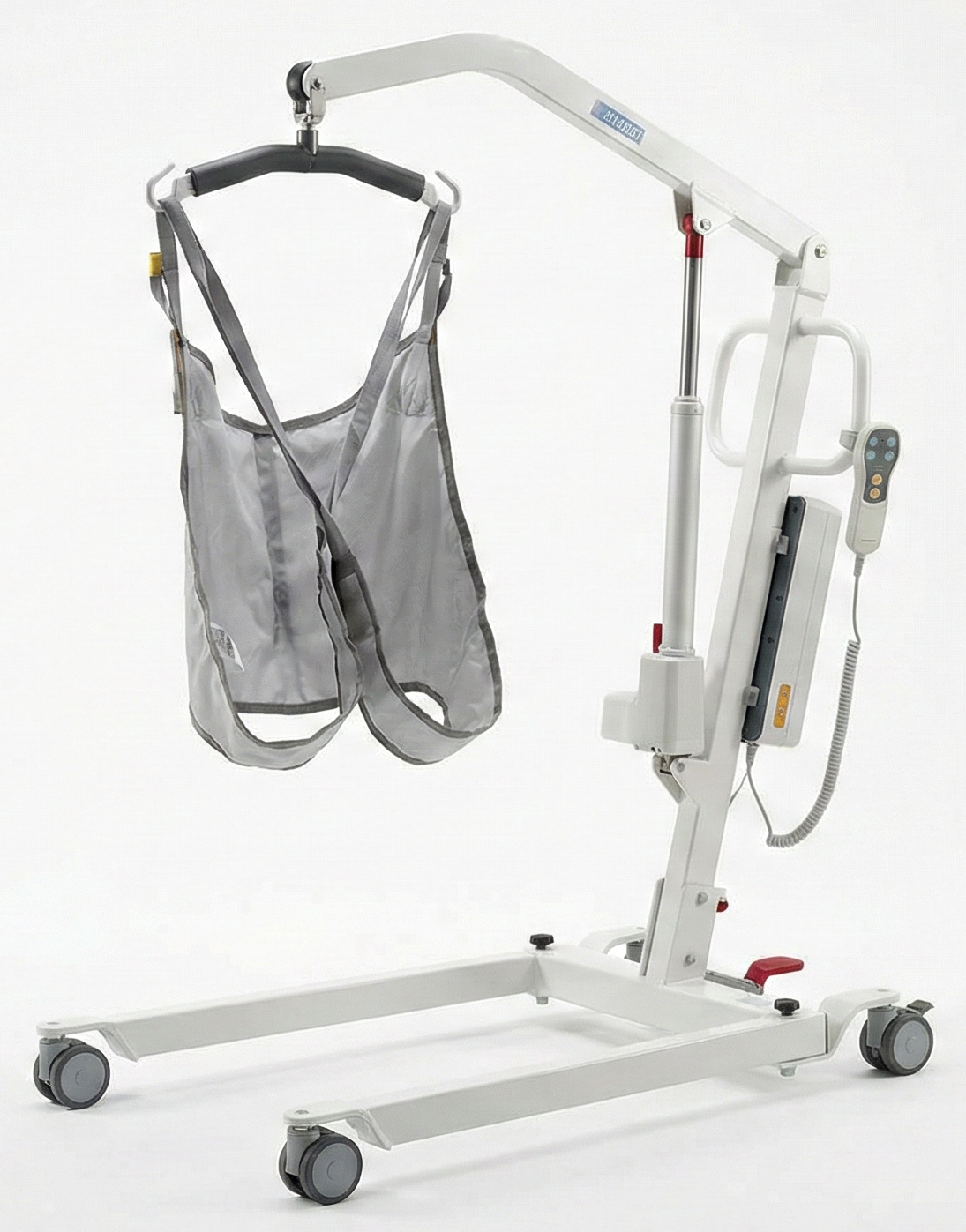
A. Lifting Hoists
These are the traditional standard in hospitals and care homes for moving patients with total dependency. They work by suspending the user in a sling.
Strengths: They are ideal for transferring a person from the bed to a wheelchair or to the bathroom.
Things to consider: They always require the help of a caregiver (they do not allow self-rescue), they take up considerable maneuvering space, and the process of fitting the sling may require prior training.
Home transfer lift with harness. It is the standard option for patients with total dependence, although it requires more maneuvering space and the mandatory assistance of a caregiver.
B. Pneumatic Lifting Cushions
Portable devices that use compressed air to progressively inflate modules and lift the user.
Strengths: Their main advantage is portability. They can be deflated and stored in a bag, making them useful when the device needs to be transported between different homes.
To keep in mind: The air surface is soft, which can create a certain feeling of instability or swaying during lifting for sensitive users.
Pneumatic lifting system with portable compressor. Requires assembly and external assistance for use in the home.

C. Electric Floor Lifts (IndeeLift Type)
These are the modern evolution for the home environment. They offer a rigid structure that lowers all the way to the floor and rises mechanically.
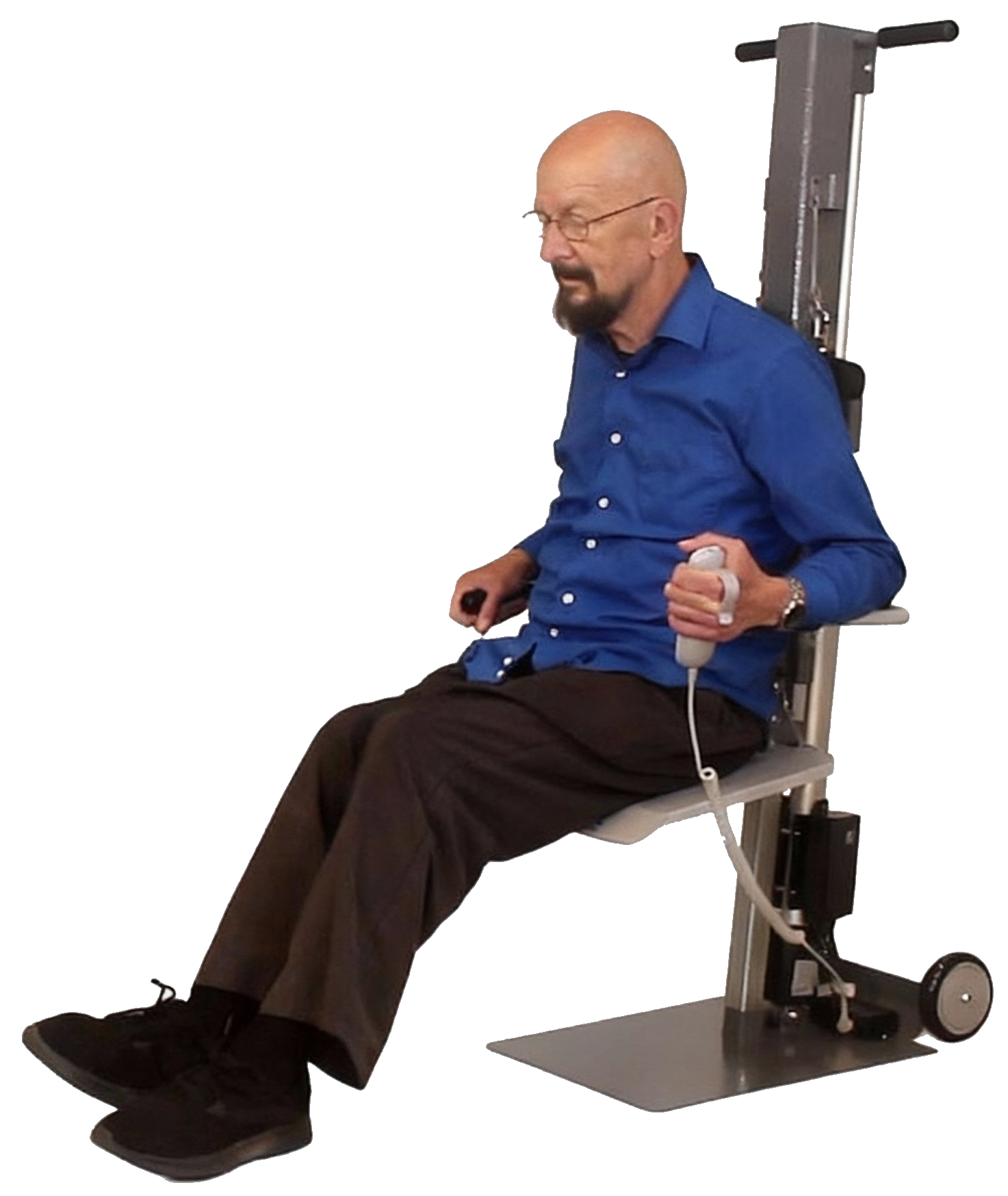
Strengths: They combine the stability of a fixed chair with the power of a lift, but in a compact size. Unlike lifts, they do not require a harness, and unlike cushions, they provide a firm and secure seat.
The key differentiator: They are the only ones that enable self-rescue; if the person retains arm mobility, they can get up independently without waiting for help.
Self-rescue demonstration with IndeeLift: Thanks to its rigid structure, the user can get up from the floor independently after a fall, without waiting for help.
3. The Benefit of “Self-Rescue”
One of the greatest advantages of modern electric lifts is that they allow self-rescue. If the fallen person still has mobility in their arms, they can crawl to the platform, sit down, and operate the control themselves. This preserves the user’s dignity and autonomy.
4. How to lift someone from the floor without equipment? (Assisted manual technique)
Only if the person can move and has no injuries:
Move into a crawling position: Help the person roll onto their side and get onto all fours.
Support on stable furniture: Bring a sturdy chair closer. The person should rest their arms on the seat.
The push: While the person pushes up, the caregiver only guides the hip and never pulls on the back.